

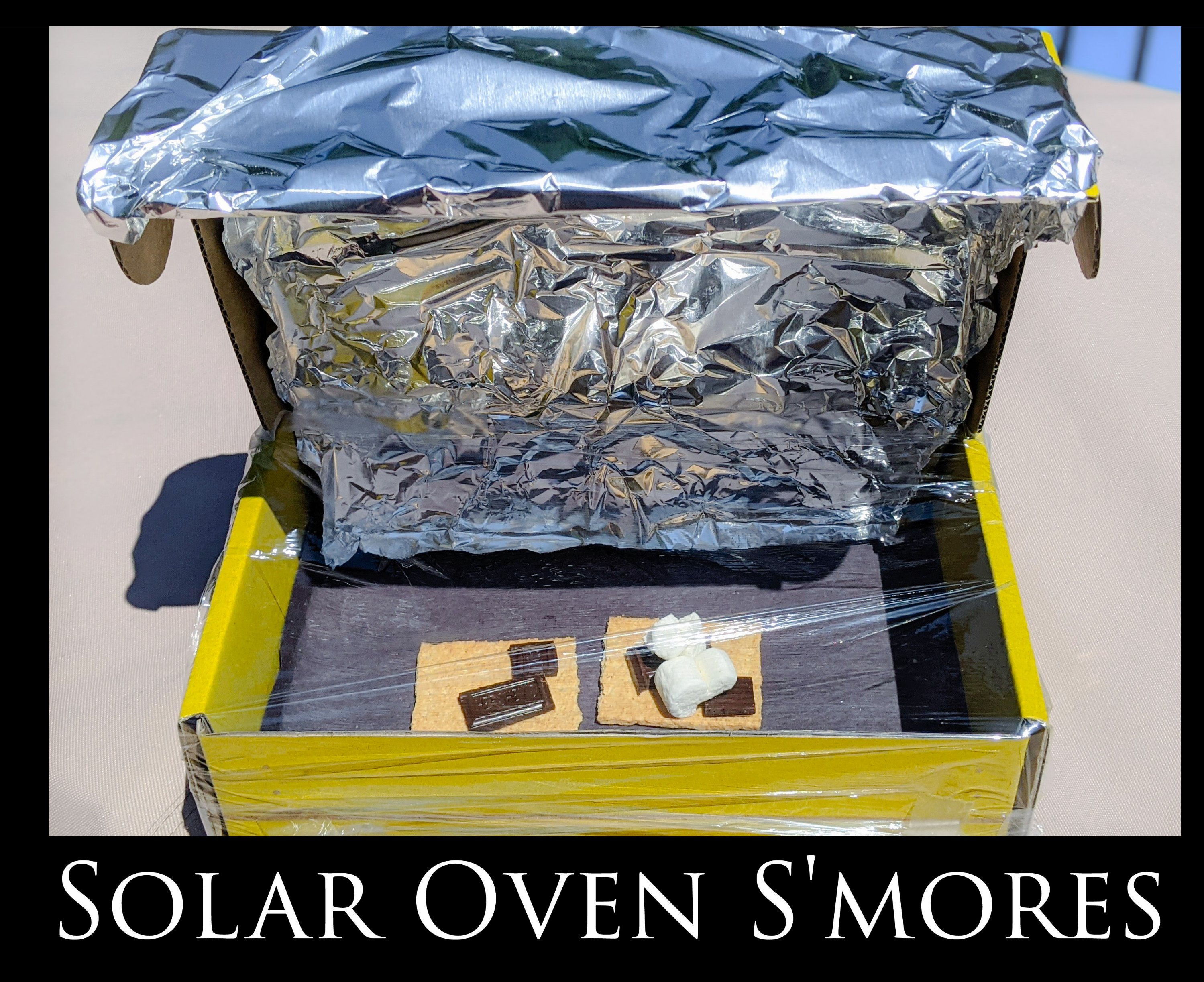
In this post, you’ll learn how to make a DIY solar oven at home with your kids! The best part about this end of summer experiment is that kids can set it up before school. Then they can see the results when they get home!
What you need:
- Shoe box or pizza box with lid (we used a kiwi crate box)
- Aluminum foil
- Black construction paper
- Cling wrap
- Graham crackers
- Marshmallows
- Chocolate (we used Hershey’s chocolate)
- A sunny location
How to assemble your oven:
- Place black construction paper on the bottom of the box.
- Place aluminum foil on the inside.
- Assemble your s’mores and place it on top of the black construction paper.
- Place cling wrap over the bottom of the box where the s’more is located.
- Place your box outside in a sunny location. Make sure to orient the foil lid so that the light is facing the black paper. Leave it there for a few hours.
What did we observe?
Our chocolate melted fairly quickly. Within about 30 minutes. We left the solar oven sit outside longer (about 2 hours) but the marshmallow only got a tad ‘squishy’. It is possible that the sun was not directed properly the entire time. Alternatively, it might not have been a hot enough day outside. We didn’t record the outside temperature so it’s hard to say what the problem might have been. 🙂 My photo above shows that the aluminum foil may not have been facing the sun the entire time. Oops! Chocolate has a lower melting temperature than the marshmallow, so it was not surprising that it melted first. We didn’t try closing part of the box to trap more of the heat inside. That might be an experiment for another day!
What’s happening?
- The black construction paper is absorbing the heat! Have you ever worn black clothes on a hot summer day? I bet they got hot really quickly! As the color black absorbs the sunlight it converts it into energy – heat! Light and heat are both forms of energy and they convert from one form to the other. So when darker colors absorb light, it is then converted to heat.
- The aluminum foil is acting like a mirror redirecting the light towards the black paper. I read separately that using the dull side may be better. It concentrates the light better across the s’mores. On the other hand, the shiny side may cause concentrated hot spots. We used the shiny side for our experiment.
Other ways to perform this experiment:
I found the NASA has this experiment posted on their kids website. They set up the solar oven box a little differently. You might want to try that one out. Let me know how it works.
There are so many different ways to perform this experiment because of the number of variables involved. Each day you will get different results because the weather is not always the same.
So, try out this experiment at home before you lose your last remaining HOT days of summer! Let me know how it went in the comments!
Looking for more science projects in the kitchen? Check out my other food science posts here!
-Kristen

 Momgineering the Future ®
Leave a comment